Randonautica (a portmanteau of "random" + "nautica") is an app launched on February 22, 2020 founded by Auburn Salcedo and Joshua Lengfelder. It randomly generates coordinates that encourages the user to explore their local area and report what is found. According to its creators, the app is "an attractor of strange things," letting one choose specific coordinates based on a specific theme. It gained controversy after a report of two teenagers coincidentally finding a corpse while using the application. == Overview == The app, which creators claim to be inspired by chaos theory and Guy Debord's Theory of the Dérive, offers its users three types of coordinates to choose from: an attractor, a void, or an anomaly. The app has a cult following on YouTube and TikTok and there is a subreddit made by the creators for users of the app. == History == 29-year-old circus performer Joshua Lengfelder discovered a bot called Fatum Project in a fringe science chat group on Telegram in January 2019. According to The New York Times, "He absorbed the project’s theories about how random exploration could break people out of their predetermined realities, and how people could influence random outcomes with their minds." Lengfelder then created a Telegram bot using Fatum Project's code, generating coordinates. He then created the subreddit r/randonauts in March. In October, developer Simon Nishi McCorkindale made the bot's webpage. With the help of Auburn Salcedo, chief executive of a TV agency, both created Randonauts LLC. Salcedo became the chief operating officer while Lengfelder was the CEO. The app, called Randonautica, was launched on February 22, 2020. Later the same year the app and back-end got completely overhauled by a new team of developers and got a more visual and friendlier design and logo. In April 2022 Lengfelder exited Randonauts LLC and Auburn Salcedo became CEO. == Reception == The app has as many as 10.8 million users as of July 2020, gaining popularity amid the COVID-19 pandemic in the United States as restrictions have been lightened. Emma Chamberlain made a YouTube video about the app that helped increase its following. i-D reported that the hashtag #randonautica has gained 176.5 million views on TikTok, although it has not marketed itself yet. === Controversy === With the app's popularity, users started reporting coincidences which many find unsettling. The majority of reports were from TikTok and Reddit, as well as Telegram. The most notable controversy involved a group of people heading to a beach in Duwamish Head, Puget Sound, West Seattle per the app, where they found a bag with two dead bodies, a 27-year-old male and a 36-year-old female, as reported by the Seattle Police homicide detectives. In August 2020, police arrested and charged their landlord, Michael Lee Dudley, in connection with the murders. In March 2021, Dudley was denied bail while other people were under suspicion of aiding Dudley in the dismemberment and disposal of the bodies, but no one else had been charged. This has caused speculation that the app has an intended, puzzle-like theme. However, Lengfelder stated that it is "a shocking coincidence." Salcedo called the videos fake, and that "It’s so hard to manage, because people are really taking creative liberties after seeing how much traction the app is getting in that fear factor." In 2022, Michael Dudley was convicted of second degree murder for killing both victims, who were identified as Jessica Lewis and Austin Wenner. He was sentenced to 46 years in prison the following year. In their questions page, Randonautica's creators have said that if the app generates coordinates inside a private property, it is a violation of their terms and conditions to trespass. In addition, Randonautica has also received allegations that the app is used for human trafficking, which its creators have denied, saying that data collected by the app are anonymous. It also ensured that the app is not designed to violate religious customs, saying that "the app is simply a tool. Just as a knife can be used either to prepare dinner or to cut somebody."
Instance selection
Instance selection (or dataset reduction, or dataset condensation) is an important data pre-processing step that can be applied in many machine learning (or data mining) tasks. Approaches for instance selection can be applied for reducing the original dataset to a manageable volume, leading to a reduction of the computational resources that are necessary for performing the learning process. Algorithms of instance selection can also be applied for removing noisy instances, before applying learning algorithms. This step can improve the accuracy in classification problems. Algorithm for instance selection should identify a subset of the total available data to achieve the original purpose of the data mining (or machine learning) application as if the whole data had been used. Considering this, the optimal outcome of IS would be the minimum data subset that can accomplish the same task with no performance loss, in comparison with the performance achieved when the task is performed using the whole available data. Therefore, every instance selection strategy should deal with a trade-off between the reduction rate of the dataset and the classification quality. == Instance selection algorithms == The literature provides several different algorithms for instance selection. They can be distinguished from each other according to several different criteria. Considering this, instance selection algorithms can be grouped in two main classes, according to what instances they select: algorithms that preserve the instances at the boundaries of classes and algorithms that preserve the internal instances of the classes. Within the category of algorithms that select instances at the boundaries it is possible to cite DROP3, ICF and LSBo. On the other hand, within the category of algorithms that select internal instances, it is possible to mention ENN and LSSm. In general, algorithm such as ENN and LSSm are used for removing harmful (noisy) instances from the dataset. They do not reduce the data as the algorithms that select border instances, but they remove instances at the boundaries that have a negative impact on the data mining task. They can be used by other instance selection algorithms, as a filtering step. For example, the ENN algorithm is used by DROP3 as the first step, and the LSSm algorithm is used by LSBo. There is also another group of algorithms that adopt different selection criteria. For example, the algorithms LDIS, CDIS and XLDIS select the densest instances in a given arbitrary neighborhood. The selected instances can include both, border and internal instances. The LDIS and CDIS algorithms are very simple and select subsets that are very representative of the original dataset. Besides that, since they search by the representative instances in each class separately, they are faster (in terms of time complexity and effective running time) than other algorithms, such as DROP3 and ICF. Besides that, there is a third category of algorithms that, instead of selecting actual instances of the dataset, select prototypes (that can be synthetic instances). In this category it is possible to include PSSA, PSDSP and PSSP. The three algorithms adopt the notion of spatial partition (a hyperrectangle) for identifying similar instances and extract prototypes for each set of similar instances. In general, these approaches can also be modified for selecting actual instances of the datasets. The algorithm ISDSP adopts a similar approach for selecting actual instances (instead of prototypes).
Shepp–Logan phantom
The Shepp–Logan phantom is a standard test image created by Larry Shepp and Benjamin F. Logan for their 1974 paper "The Fourier Reconstruction of a Head Section". It serves as the model of a human head in the development and testing of image reconstruction algorithms. == Definition == The function describing the phantom is defined as the sum of 10 ellipses inside a 2×2 square:
Desktop Window Manager
Desktop Window Manager (DWM, previously Desktop Compositing Engine or DCE in builds of pre-reset Windows Longhorn) is the compositing window manager in Microsoft Windows since Windows Vista that enables the use of hardware acceleration to render the graphical user interface of Windows. It was originally created to enable portions of the new "Windows Aero" user experience, which allowed for effects such as transparency, 3D window switching and more. It is also included with Windows Server 2008, but requires the "Desktop Experience" feature and compatible graphics drivers to be installed. == Architecture == The Desktop Window Manager is a compositing window manager, meaning that each program has a buffer that it writes data to; DWM then composites each program's buffer into a final image. By comparison, the stacking window manager in Windows XP and earlier (and also Windows Vista and Windows 7 with Windows Aero disabled) comprises a single display buffer to which all programs write. DWM works in different ways depending on the operating system (Windows 7 or Windows Vista) and on the version of the graphics drivers it uses (WDDM 1.0 or 1.1). Under Windows 7 and with WDDM 1.1 drivers, DWM only writes the program's buffer to the video RAM, even if it is a graphics device interface (GDI) program. This is because Windows 7 supports (limited) hardware acceleration for GDI and in doing so does not need to keep a copy of the buffer in system RAM so that the CPU can write to it. Because the compositor has access to the graphics of all applications, it easily allows visual effects that string together visuals from multiple applications, such as transparency. DWM uses DirectX to perform the function of compositing and rendering in the GPU, freeing the CPU of the task of managing the rendering from the off-screen buffers to the display. However, it does not affect applications painting to the off-screen buffers – depending on the technologies used for that, this might still be CPU-bound. DWM-agnostic rendering techniques like GDI are redirected to the buffers by rendering the user interface (UI) as bitmaps. DWM-aware rendering technologies like WPF directly make the internal data structures available in a DWM-compatible format. The window contents in the buffers are then converted to DirectX textures. The desktop itself is a full-screen Direct3D surface, with windows being represented as a mesh consisting of two adjacent (and mutually inverted) triangles, which are transformed to represent a 2D rectangle. The texture, representing the UI chrome, is then mapped onto these rectangles. Window transitions are implemented as transformations of the meshes, using shader programs. With Windows Vista, the transitions are limited to the set of built-in shaders that implement the transformations. Greg Schechter, a developer at Microsoft has suggested that this might be opened up for developers and users to plug in their own effects in a future release. DWM only maps the primary desktop object as a 3D surface; other desktop objects, including virtual desktops as well as the secure desktop used by User Account Control are not. Because all applications render to an off-screen buffer, they can be read off the buffer embedded in other applications as well. Since the off-screen buffer is constantly updated by the application, the embedded rendering will be a dynamic representation of the application window and not a static rendering. This is how the live thumbnail previews and Windows Flip work in Windows Vista and Windows 7. DWM exposes a public API that allows applications to access these thumbnail representations. The size of the thumbnail is not fixed; applications can request the thumbnails at any size - smaller than the original window, at the same size or even larger - and DWM will scale them properly before returning. Aero Flip does not use the public thumbnail APIs as they do not allow for directly accessing the Direct3D textures. Instead, Aero Flip is implemented directly in the DWM engine. The Desktop Window Manager uses Media Integration Layer (MIL), the unmanaged compositor which it shares with Windows Presentation Foundation, to represent the windows as composition nodes in a composition tree. The composition tree represents the desktop and all the windows hosted in it, which are then rendered by MIL from the back of the scene to the front. Since all the windows contribute to the final image, the color of a resultant pixel can be decided by more than one window. This is used to implement effects such as per-pixel transparency. DWM allows custom shaders to be invoked to control how pixels from multiple applications are used to create the displayed pixel. The DWM includes built-in Pixel Shader 2.0 programs which compute the color of a pixel in a window by averaging the color of the pixel as determined by the window behind it and its neighboring pixels. These shaders are used by DWM to achieve the blur effect in the window borders of windows managed by DWM, and optionally for the areas where it is requested by the application. Since MIL provides a retained mode graphics system by caching the composition trees, the job of repainting and refreshing the screen when windows are moved is handled by DWM and MIL, freeing the application of the responsibility. The background data is already in the composition tree and the off-screen buffers and is directly used to render the background. In pre-Vista Windows OSs, background applications had to be requested to re-render themselves by sending them the WM_PAINT message. DWM uses double-buffered graphics to prevent flickering and tearing when moving windows. The compositing engine uses optimizations such as culling to improve performance, as well as not redrawing areas that have not changed. Because the compositor is multi-monitor aware, DWM natively supports this too. During full-screen applications, such as games, DWM does not perform window compositing and therefore performance will not appreciably decrease. On Windows 8 and Windows Server 2012, DWM is used at all times and cannot be disabled, due to the new "start screen experience" implemented. Since the DWM process is usually required to run at all times on Windows 8, users experiencing an issue with the process are seeing memory usage decrease after a system reboot. This is often the first step in a long list of troubleshooting tasks that can help. It is possible to prevent DWM from restarting temporarily in Windows 8, which causes the desktop to turn black, the taskbar grey, and break the start screen/modern apps, but desktop apps will continue to function and appear just like Windows 7 and Vista's Basic theme, based on the single-buffer renderer used by XP. They also use Windows 8's centered title bar, visible within Windows PreInstallation Environment. Starting up Windows without DWM will not work because the default lock screen requires DWM unlike the fallback lockscreen that appears as a command line interface program when Windows.UI.Logon.dll isn't present on Windows versions such as 1507 and later, so it can only be done on the fly, and does not have any practical purposes. Starting with Windows 10, disabling DWM in such a way will cause the entire compositing engine to break, even traditional desktop apps, due to Universal App implementations in the taskbar and new start menu. Windows can still be partially usable without the presence of DWM but requires Sihost.exe to not be present due to it relying on DWM. Most of the applications in Windows 11 require DWM to render UI elements and transparency, Windows 11's new task manager requires dwm to render menus unlike the fallback -d version. Unlike its predecessors, Windows 8 supports basic display adapters through Windows Advanced Rasterization Platform (WARP), which uses software rendering and the CPU to render the interface rather than the graphics card. This allows DWM to function without compatible drivers, but not at the same level of performance as with a normal graphics card. DWM on Windows 8 also adds support for stereoscopic 3D. == Redirection == For rendering techniques that are not DWM-aware, output must be redirected to the DWM buffers. With Windows, either GDI or DirectX can be used for rendering. To make these two work with DWM, redirection techniques for both are provided. With GDI, which is the most used UI rendering technique in Microsoft Windows, each application window is notified when it or a part of it comes in view and it is the job of the application to render itself. Without DWM, the rendering rasterizes the UI in a buffer in video memory, from where it is rendered to the screen. Under DWM, GDI calls are redirected to use the Canonical Display Driver (cdd.dll), a software renderer. A buffer equal to the size of the window is allocated in system memory and CDD.DLL outputs to this buffer rather than the video memory. Another buffer is allocated in the video memory to represent t
Biorobotics
Biorobotics is an interdisciplinary science that combines the fields of biomedical engineering, cybernetics, and robotics to develop new technologies that integrate biology with mechanical systems to develop more efficient communication, alter genetic information, and create machines that imitate biological systems. == Cybernetics == Cybernetics focuses on the communication and system of living organisms and machines that can be applied and combined with multiple fields of study such as biology, mathematics, computer science, engineering, and much more. This discipline falls under the branch of biorobotics because of its combined field of study between biological bodies and mechanical systems. Studying these two systems allows for advanced analysis on the functions and processes of each system as well as the interactions between them. === History === Cybernetic theory is a concept that has existed for centuries, dating back to the era of Plato where he applied the term to refer to the "governance of people". The term cybernetique is seen in the mid-1800s used by physicist André-Marie Ampère. The term cybernetics was popularized in the late 1940s to refer to a discipline that touched on, but was separate, from established disciplines, such as electrical engineering, mathematics, and biology. === Science === Cybernetics is often misunderstood because of the breadth of disciplines it covers. In the early 20th century, it was coined as an interdisciplinary field of study that combines biology, science, network theory, and engineering. Today, it covers all scientific fields with system related processes. The goal of cybernetics is to analyze systems and processes of any system or systems in an attempt to make them more efficient and effective. === Applications === Cybernetics is used as an umbrella term so applications extend to all systems related scientific fields such as biology, mathematics, computer science, engineering, management, psychology, sociology, art, and more. Cybernetics is used amongst several fields to discover principles of systems, adaptation of organisms, information analysis and much more. == Genetic engineering == Genetic engineering is a field that uses advances in technology to modify biological organisms. Through different methods, scientists are able to alter the genetic material of microorganisms, plants and animals to provide them with desirable traits. For example, making plants grow bigger, better, and faster. Genetic engineering is included in biorobotics because it uses new technologies to alter biology and change an organism's DNA for their and society's benefit. === History === Although humans have modified genetic material of animals and plants through artificial selection for millennia (such as the genetic mutations that developed teosinte into corn and wolves into dogs), genetic engineering refers to the deliberate alteration or insertion of specific genes to an organism's DNA. The first successful case of genetic engineering occurred in 1973 when Herbert Boyer and Stanley Cohen were able to transfer a gene with antibiotic resistance to a bacterium. === Science === There are three main techniques used in genetic engineering: The plasmid method, the vector method and the biolistic method. ==== Plasmid method ==== This technique is used mainly for microorganisms such as bacteria. Through this method, DNA molecules called plasmids are extracted from bacteria and placed in a lab where restriction enzymes break them down. As the enzymes do this, some develop a rough edge that resembles that of a staircase which is considered 'sticky' and capable of reconnecting. These 'sticky' molecules are inserted into another bacteria where they will connect to the DNA rings with the altered genetic material. ==== Vector method ==== The vector method is considered a more precise technique than the plasmid method as it involves the transfer of a specific gene instead of a whole sequence. In the vector method, a specific gene from a DNA strand is isolated through restriction enzymes in a laboratory and is inserted into a vector. Once the vector accepts the genetic code, it is inserted into the host cell where the DNA will be transferred. ==== Biolistic method ==== The biolistic method is typically used to alter the genetic material of plants. This method embeds the desired DNA with a metallic particle such as gold or tungsten in a high speed gun. The particle is then bombarded into the plant. Due to the high velocities and the vacuum generated during bombardment, the particle is able to penetrate the cell wall and inserts the new DNA into the cell. === Applications === Genetic engineering has many uses in the fields of medicine, research and agriculture. In the medical field, genetically modified bacteria are used to produce drugs such as insulin, human growth hormones and vaccines. In research, scientists genetically modify organisms to observe physical and behavioral changes to understand the function of specific genes. In agriculture, genetic engineering is extremely important as it is used by farmers to grow crops that are resistant to herbicides and to insects such as BTCorn. == Bionics == Bionics is a medical engineering field and a branch of biorobotics consisting of electrical and mechanical systems that imitate biological systems, such as prosthetics and hearing aids. It's a portmanteau that combines biology and electronics. === History === The history of bionics goes as far back in time as ancient Egypt. A prosthetic toe made out of wood and leather was found on the foot of a mummy. The time period of the mummy corpse was estimated to be from around the fifteenth century B.C. Bionics can also be witnessed in ancient Greece and Rome. Prosthetic legs and arms were made for amputee soldiers. In the early 16th century, a French military surgeon by the name of Ambroise Pare became a pioneer in the field of bionics. He was known for making various types of upper and lower prosthetics. One of his most famous prosthetics, Le Petit Lorrain, was a mechanical hand operated by catches and springs. During the early 19th century, Alessandro Volta further progressed bionics. He set the foundation for the creation of hearing aids with his experiments. He found that electrical stimulation could restore hearing by inserting an electrical implant to the saccular nerve of a patient's ear. In 1945, the National Academy of Sciences created the Artificial Limb Program, which focused on improving prosthetics since there were a large number of World War II amputee soldiers. Since this creation, prosthetic materials, computer design methods, and surgical procedures have improved, creating modern-day bionics. === Science === ==== Prosthetics ==== The important components that make up modern-day prosthetics are the pylon, the socket, and the suspension system. The pylon is the internal frame of the prosthetic that is made up of metal rods or carbon-fiber composites. The socket is the part of the prosthetic that connects the prosthetic to the person's missing limb. The socket consists of a soft liner that makes the fit comfortable, but also snug enough to stay on the limb. The suspension system is important in keeping the prosthetic on the limb. The suspension system is usually a harness system made up of straps, belts or sleeves that are used to keep the limb attached. The operation of a prosthetic could be designed in various ways. The prosthetic could be body-powered, externally-powered, or myoelectrically powered. Body-powered prosthetics consist of cables attached to a strap or harness, which is placed on the person's functional shoulder, allowing the person to manipulate and control the prosthetic as he or she deems fit. Externally-powered prosthetics consist of motors to power the prosthetic and buttons and switches to control the prosthetic. Myoelectrically powered prosthetics are new, advanced forms of prosthetics where electrodes are placed on the muscles above the limb. The electrodes will detect the muscle contractions and send electrical signals to the prosthetic to move the prosthetic. The downside to this type of prosthetic is that if the sensors are not placed correctly on the limb then the electrical impulses will fail to move the prosthetic. TrueLimb is a specific brand of prosthetics that uses myoelectrical sensors which enable a person to have control of their bionic limb. ==== Hearing aids ==== Four major components make up the hearing aid: the microphone, the amplifier, the receiver, and the battery. The microphone takes in outside sound, turns that sound to electrical signals, and sends those signals to the amplifier. The amplifier increases the sound and sends that sound to the receiver. The receiver changes the electrical signal back into sound and sends the sound into the ear. Hair cells in the ear will sense the vibrations from the sound, convert the vibrations into nerve signals, and send it to the brain so
Artificial brain
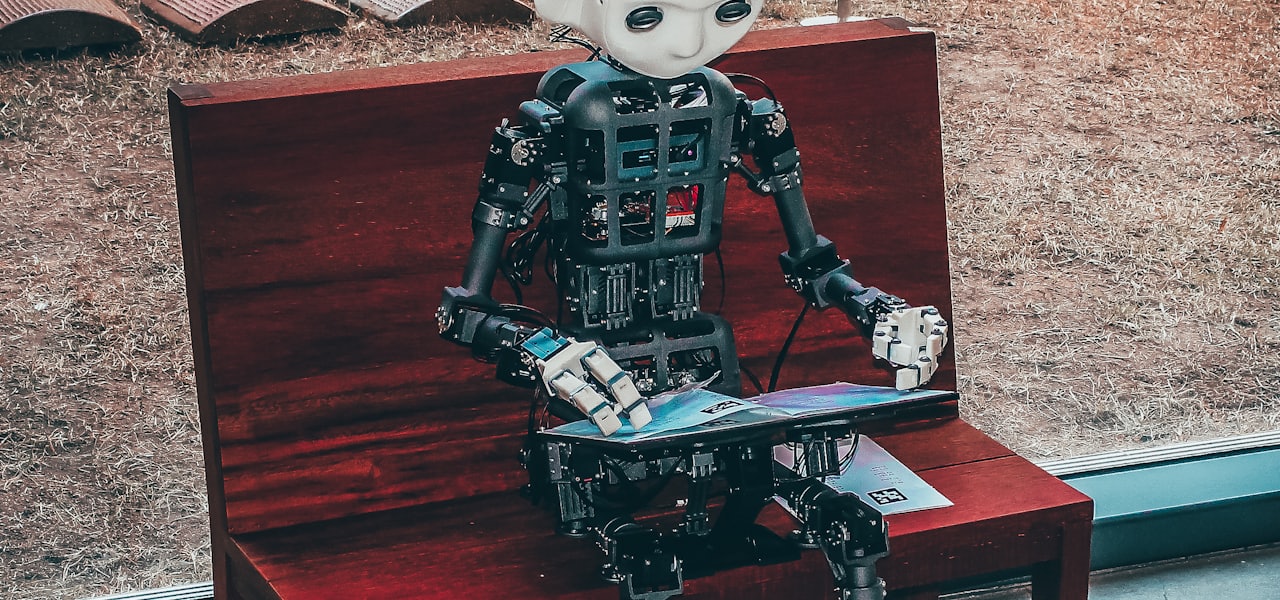
An artificial brain (or artificial mind) is software and hardware with cognitive abilities similar to those of the animal or human brain. Research investigating "artificial brains" and brain emulation plays three important roles in science: An ongoing attempt by neuroscientists to understand how the human brain works, known as cognitive neuroscience. A thought experiment in the philosophy of artificial intelligence, demonstrating that it is possible, at least in theory, to create a machine that has all the capabilities of a human being. A long-term project to create machines exhibiting behavior comparable to those of animals with complex central nervous system such as mammals and most particularly humans. The ultimate goal of creating a machine exhibiting human-like behavior or intelligence is sometimes called strong AI. An example of the first objective is the project reported by Aston University in Birmingham, England where researchers are using biological cells to create "neurospheres" (small clusters of neurons) in order to develop new treatments for diseases including Alzheimer's, motor neurone and Parkinson's disease. The second objective is a reply to arguments such as John Searle's Chinese room argument, Hubert Dreyfus's critique of AI or Roger Penrose's argument in The Emperor's New Mind. These critics argued that there are aspects of human consciousness or expertise that can not be simulated by machines. One reply to their arguments is that the biological processes inside the brain can be simulated to any degree of accuracy. This reply was made as early as 1950, by Alan Turing in his classic paper "Computing Machinery and Intelligence". The third objective is generally called artificial general intelligence by researchers. However, Ray Kurzweil prefers the term "strong AI". In his book The Singularity is Near, he focuses on whole brain emulation using conventional computing machines as an approach to implementing artificial brains, and claims (on grounds of computer power continuing an exponential growth trend) that this could be done by 2025. Henry Markram, director of the Blue Brain project (which is attempting brain emulation), made a similar claim (2020) at the Oxford TED conference in 2009. == Approaches to brain simulation == W. Ross Ashby's pioneering work in cybernetics provided an early mathematical framework for understanding adaptive brain-like systems. In his 1952 book Design for a Brain, Ashby proposed that the brain could be modeled as an ultrastable system that maintains equilibrium through continuous adaptation to environmental perturbations. His approach used differential equations and state-space models to describe how neural systems could exhibit purposeful behavior through feedback mechanisms. Ashby's homeostat, a physical machine built in 1948, demonstrated these principles through an electromechanical device with four interconnected units that automatically adjusted their parameters to maintain stability when disturbed. The homeostat represented one of the first attempts to build an artificial system exhibiting brain-like adaptive behavior, influencing subsequent work in adaptive systems, neural networks, and artificial intelligence. Although direct human brain emulation using artificial neural networks on a high-performance computing engine is a commonly discussed approach, there are other approaches. An alternative artificial brain implementation could be based on Holographic Neural Technology (HNeT) non linear phase coherence/decoherence principles. The analogy has been made to quantum processes through the core synaptic algorithm which has strong similarities to the quantum mechanical wave equation. EvBrain is a form of evolutionary software that can evolve "brainlike" neural networks, such as the network immediately behind the retina. In November 2008, IBM received a US$4.9 million grant from the Pentagon for research into creating intelligent computers. The Blue Brain project is being conducted with the assistance of IBM in Lausanne. The project is based on the premise that it is possible to artificially link the neurons "in the computer" by placing thirty million synapses in their proper three-dimensional position. Some proponents of strong AI speculated in 2009 that computers in connection with Blue Brain and Soul Catcher may exceed human intellectual capacity by around 2015, and that it is likely that we will be able to download the human brain at some time around 2050. While Blue Brain is able to represent complex neural connections on the large scale, the project does not achieve the link between brain activity and behaviors executed by the brain. In 2012, project Spaun (Semantic Pointer Architecture Unified Network) attempted to model multiple parts of the human brain through large-scale representations of neural connections that generate complex behaviors in addition to mapping. Spaun's design recreates elements of human brain anatomy. The model, consisting of approximately 2.5 million neurons, includes features of the visual and motor cortices, GABAergic and dopaminergic connections, the ventral tegmental area (VTA), substantia nigra, and others. The design allows for several functions in response to eight tasks, using visual inputs of typed or handwritten characters and outputs carried out by a mechanical arm. Spaun's functions include copying a drawing, recognizing images, and counting. There are good reasons to believe that, regardless of implementation strategy, the predictions of realising artificial brains in the near future are optimistic. In particular brains (including the human brain) and cognition are not currently well understood, and the scale of computation required is unknown. Another near term limitation is that all current approaches for brain simulation require orders of magnitude larger power consumption compared with a human brain. The human brain consumes about 20 W of power, whereas current supercomputers may use as much as 1 MW—i.e., an order of 100,000 more. == Artificial brain thought experiment == Some critics of brain simulation believe that it is simpler to create general intelligent action directly without imitating nature. Some commentators have used the analogy that early attempts to construct flying machines modeled them after birds, but that modern aircraft do not look like birds.
CinePlayer
CinePlayer is a software based media player used to review Digital Cinema Packages (DCP) without the need for a digital cinema server by Doremi Labs. CinePlayer can play back any DCP, not just those created by Doremi Mastering products. In addition to playing DCPs, CinePlayer can also playback JPEG2000 image sequences and many popular multimedia file types. There are two versions of CinePlayer available, standard and Pro. The standard version supports playback of non-encrypted, 2D DCP's up to 2K resolution. The Pro version supports playback of encrypted, 2D or 3D DCP's with subtitles up to 4K resolution. == Supported formats == === Containers === AVI MOV MXF MPG TS WMV M2TS MTS MP4 MKV === Video codecs === JPEG2000 ProRes 422 DNxHD YUV Uncompressed 8-10 bits DIVX XVID MPEG4 AVC / H-264 VC-1 MPEG2 === Supported image sequences === BMP TIFF TGA DPX JPG J2C === Supported audio files === WAV MP3 WMA MP2